Produced Water
Salt-brine spill remediation
A liquid that remediates salt-water and produced-water spills in place — no digging, no hauling, and permanent results unlike gypsum.
Explore Contact Us
Solutions / Environmental Remediation
Three liquid remediation technologies for the oil, gas, and industrial sectors — salt-brine, hydrocarbons, and heavy metals. Applied on-site with standard equipment, they treat contamination where it sits, at a fraction of the cost of excavation.
The Enviro line
Produced Water
A liquid that remediates salt-water and produced-water spills in place — no digging, no hauling, and permanent results unlike gypsum.
ExploreHydrocarbons
A patented in-situ process that breaks hydrocarbons down and renders them harmless — typically below regulatory limits in about 30 days.
ExploreHeavy Metals
An EPA Design for the Environment–recognized product that locks free metal ions into a stable, immobile compound.
ExploreProduced Water & Salt-Brine
Salt-brine and produced-water spills are part of drilling and producing oil — and they hurt the environment, the landowner relationship, and the bottom line. SoilTech remediates them in place: a liquid applied with a standard sprayer over a few passes, with no soil removal, no tilling, and no heavy equipment.
The cost difference
Dig-and-haul can run $50,000+ an acre and hauls the problem somewhere else. SoilTech remediates the same acre in place for as little as $1,500 — faster and more thoroughly than gypsum or phyto-remediation, so the site is restored and the landowner is back to normal sooner.
Proof in the field
Real produced-water and salt-brine sites we’ve treated across oil country — photographed before treatment and again once the ground recovered. No soil was hauled off. The salt hasn’t come back.
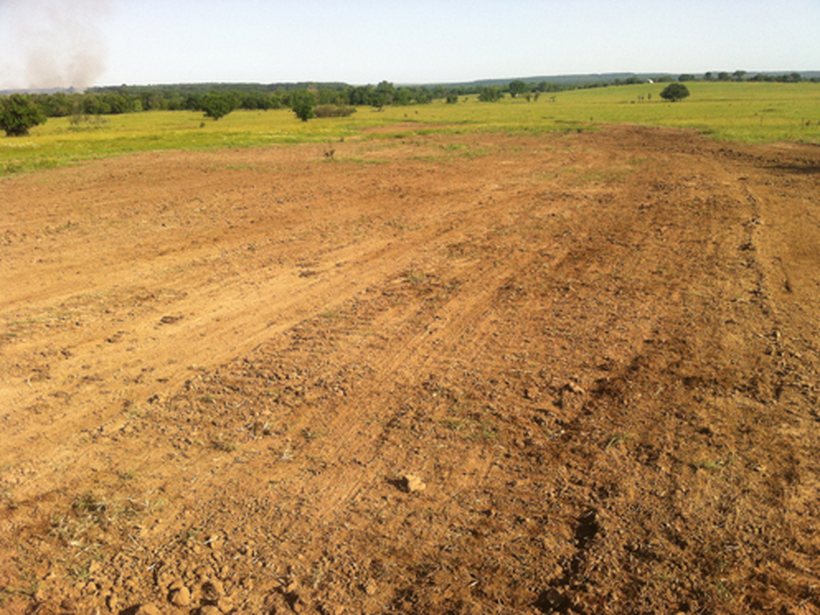
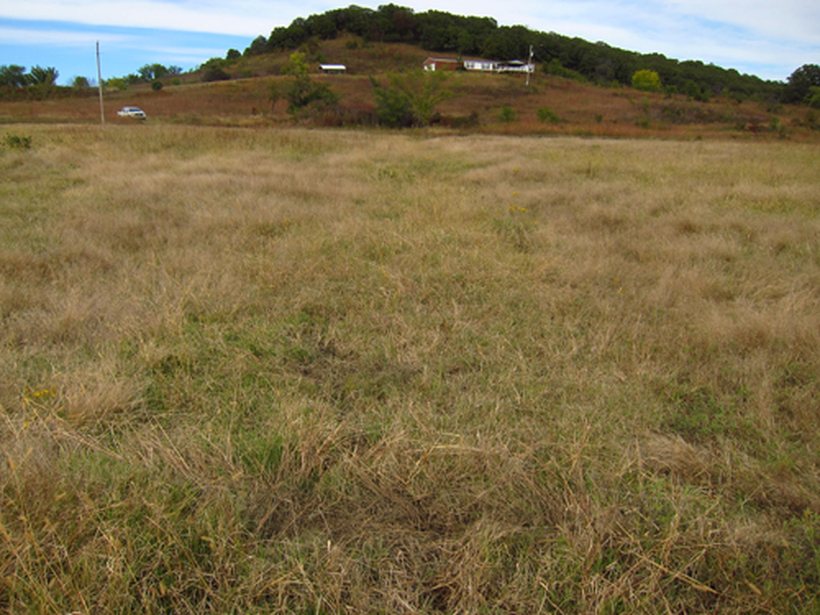
One of the larger produced-water sites we’ve treated. The spill left a sharply outlined dead zone; within a year it was more than 90% restored, and it’s since come back completely — with no salt returning to the site.
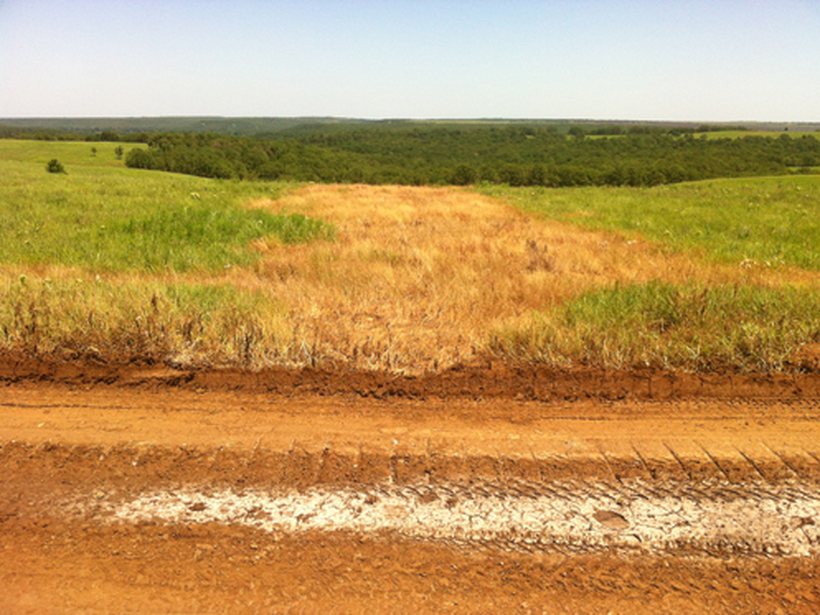
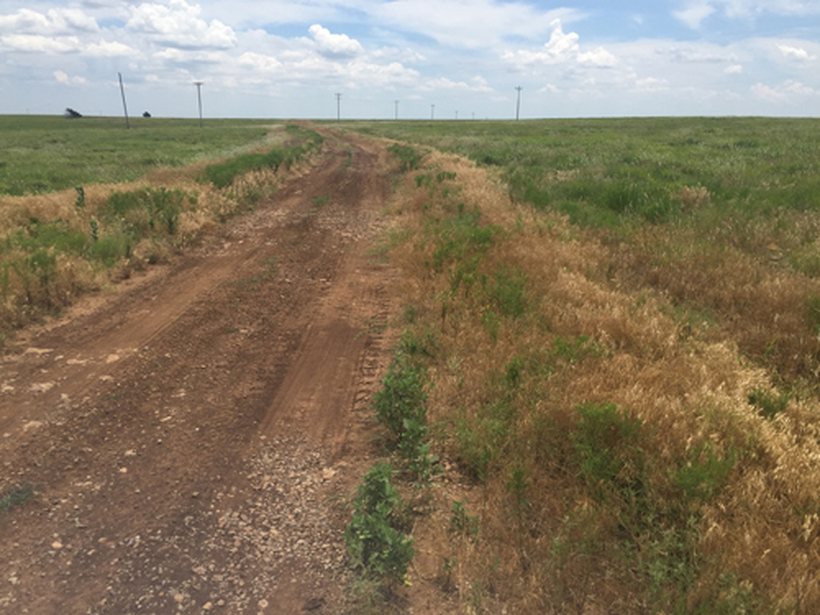
The salt was so concentrated it left nearly a half-inch crust on the road. Four applications of SoilTech brought it back — by the end of the following year it was hard to tell a spill had ever happened, with no salt migrating downhill toward the pond.
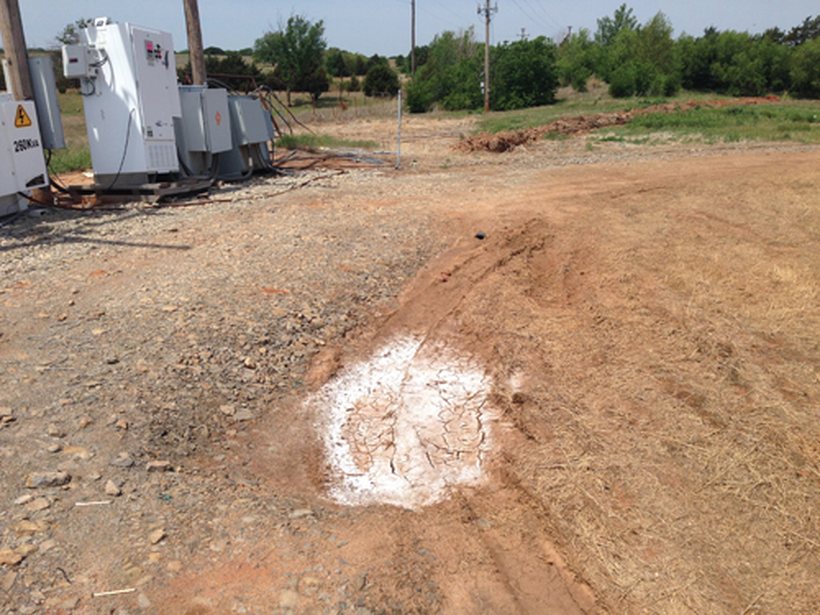
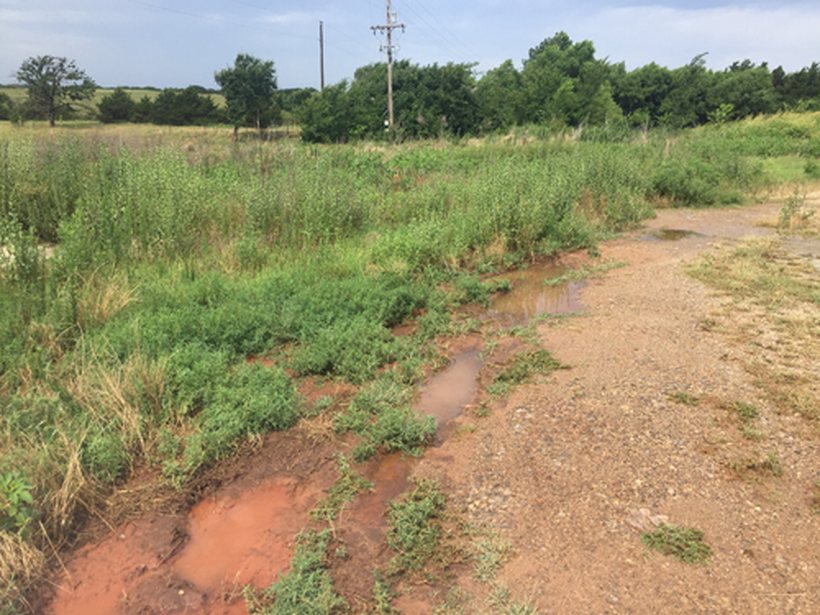
A salt-brine spill right at the wellhead had crusted the ground white and killed everything on it. Treated in place with no excavation, the same spot is growing vegetation again.
Hydrocarbons / SoilTech-HCR
Crude and other hydrocarbon spills are a fact of the business. When one happens, the usual choices are slow and expensive: dig-and-haul, or microbial products that can take 180 days or more and only work in warm weather. SoilTech-HCR is a patented, in-situ process that changes the chemical properties of the hydrocarbons and renders them harmless — it remediates them rather than covering them up or transferring them elsewhere.
HCR typically lowers hydrocarbon levels below regulatory standards in about 30 days, and can be applied any time of year, in any weather. In practice it often moves far faster than that: after a crude-oil spill in Kuwait, a single treatment cut TPH from over 2,900 ppb to 810 ppb in 24 hours — enough to meet the country’s environmental standard. At a drilling yard, soil averaging roughly 6,000 ppm TPH dropped to about 120–138 ppm in five days, and to 10–23 ppm by day 27 with no further treatment. Because it’s treated in place, there’s no dig-and-haul, and normal site activity resumes in hours, not days.
Use it on soil, sand, grasses, wetlands, fresh water, salt water, and concrete. It cleans crude, fuel oil, gas spills, oil sludge, creosote, chemicals, and acidic water. Independent aquatic toxicity tests show it’s less toxic than dispersants and detergents — a safer choice for spills on or near water.
The numbers below come from an independent treatability study on Phillips 66 Duncan Refinery samples and from a diesel spill cleaned up in the field — not from our own bench.
Phillips 66 Duncan Refinery · lab study (sampling & analysis by GHD)
On refinery waste samples, total petroleum hydrocarbons (C9–C36) fell by as much as 89% — one sample dropped from 50,900 to 5,560 mg/kg. Priority PAHs including benzo(a)pyrene, benzo(a)anthracene, and chrysene were driven to non-detect. In separate crude-oil testing, a single application reduced petroleum leachability by 72% — with no soil removal.
Diesel spill · field cleanup
After a 295-gallon diesel spill reached a highway ditch and a pasture pond, a single round of treatment cut total petroleum hydrocarbons in the impacted area from over 15,000 mg/kg to non-detect, with samples pulled about ten days later. What’s left behind is an inert silicate powder.
Heavy Metals / HMR
Heavy Metal Remediation is a one-of-a-kind, patented product that adds a water-based liquid to contaminated soil, sludge, or water. On contact, it converts free metal ions into a new, highly stable compound that won’t break down in the environment — eliminating their mobility in place, in-situ or ex-situ.
EPA recognized
HMR is recognized as an EPA Design for the Environment (DfE) product — meaning it passed a third-party toxicology review and an EPA scientific review for safer chemistry. It remediates contaminated soil, sludge, and water rather than storing the problem in tanks or liners that can leak.